Category Archives: #Musicetal

Libby Titus

Libby Titus

July 6, 1947 – October 13, 2024

Libby TitusHer New York Times obituary described Libby Titus as “A highly regarded songwriter and backup vocalist in the 1970s...[who] never scaled the commercial heights as a solo artist. Still, she garnered critical praise for her first and only major-label album, called simply “Libby Titus

Early Life

Libby was born Elizabeth Jurist in Woodstock.  Her mother, Julia Irene Jurist had been a dancer for the Earl Carroll revue. Libby attended Bard College, but her studies were cut short  when she became pregnant and married novelist Barry Titus (grandson of Helena Rubinstein) in 1966; they had one son,Ezra, but separated in 1968.

Libby Titus #1

Around 1968, she released her first album entitled Libby Titus. It included covers of the Beatles’ “Fool On The Hill” and “Here, There And Everywhere” as well as John Sebastian’s “You Didn’t Have to Be So Nice.”

The back cover of the album says, “Libby Makes The World Go Round,” but the title of the album seems to be just ‘Libby Titus.’

Levon Helm

I wasn’t familiar with Titus until her name came up in Barney Hoskins‘s 2016 Small Town Talk: Bob Dylan, The Band, Van Morrison, Janis Joplin, Jimi Hendrix and Friends in the Wild Years of Woodstock.

The way the story goes (and likely requires a large grain of salt), The Band’s Levon Helm, Rick Danko, and Richard Manual were Woodstock’s wilder and crazier members and they were particularly interested in the women of Woodstock as were the Woodstock women in them.

Rick Danko and Levon Helm were racing to see Libby Titus. Rick crashed resulting in The Band’s inability to tour following the critical success of their Music From Big Pink album. Poor Albert Grossman, manager of many including Bob Dylan and The Band.  Bob’s motorcycle crash prevented him from touring and now another of Albert’s stars are unable to tour.

Anyway, Levon won

From 1969 through much of the 1970s, Libby and Levon were together  On December 3, 1970, they had a daughter . Amy.

Libby Titus
Levon Helm, daughter Amy, Libby


Libby Titus #2

Libby TitusIn 1977 Columbia released her second album, also called Libby Titus. A  a mix of covers and original co-writings, it featured noteworthy names such as Phil Ramone, Paul Simon, Carly Simon, Garth Brooks, and Robbie Robertson among the many noteworthy credits (All Music listing)

Note the last cut on Side One: Love Has No Pride. Written by Titus and Eric Kaz, it will become her best known song, but not by her. Perhaps the cover you know best is Bonnie Raitt’s.

A few other well-known names covered the song such as Linda Ronstadt, Rita Wilson, Lynn Anderson, and Rita Coolidge.

Dr John

After splitting with Levon Helm, Titus took up with Dr. John, who wrote a lovely instrumental for her, “Pretty Libby,” on his solo piano LP Brightest Smile In Town.

Not only did Titus inspire Dr John, but Carly Simon, too.

If all our flights are groundedLibby, we’ll meet in ParisDance along the boulevardsAnd have no one to embarrass,Puttin’ on the Ritz in style With an Arab and an Heiress,Libby we’ll fly away – heyLeave behind our bluesTrade them all inFor a Paris breeze.Libby we’ll fly

Donald Fagen

Though he did not grow up there, Passaic, NJ’s Donald Fagen, like so many other then young musicians, became (and continues to be) another Woodstock resident He had attended Bard College at the same time as Titus, but they were simply two ships passing in the night.

Titus met Fagen in 1987 when they both went backstage to hang with Dr. John.

Titus recalled in a Variety article, “…we went to dinner and got into this conversation that never ended. He took me out to dinners, and we kept talking until the spring of ’89.”

She continued, In May of 1989 he did a show for me with Dr. John at Elaine’s [NYC], of all places, and it was the first time he had performed in years.

“After that we decided to do our own show. We got various artists to do Jerry Ragovoy songs. Donald didn’t want to perform, but I said, ‘You have to, or no one’s going to come.’ We did our shows once a month or once every two months then – it became the New York Rock and Soul Revue.”

New York Rock & Soul Revue

The Revue gathered veteran vocalists and session heroes (Michael McDonald, Phoebe Snow, Boz Scaggs, David & Eddie Brigati, Donald Fagen and later Walter Becker). The performances were collected for The New York Rock & Soul Revue: Live at the Beacon (released 1991). Titus’s show-producing role is widely credited with pulling these artists together and, by some accounts, encouraging Donald Fagen’s renewed interest in live performance.

The video below features a 1991 New York Rock & Soul Revue show featuring Fagen, Boz Scaggs, Michael McDonald, Phoebe Snow, and Eddie and David Brigati,

Fagen and Titus married in 1993 and of course he’d write about their relationship, a sometimes rocky one.

The stars are bright tonight
The air is sweet
Though summer’s over now
There’s a strange new music in the street
You and I
Know the world can’t be like this
It’s our love that makes it shineGirl
Whatever trouble waits outside these doors
We’re safe inside this house of light
We make up our own storyline


Around the neighborhood
They stare and grin
As if they live their lives
Just to help maintain the state we’re in
But when we fight
Then those hungry wolves close in
We’re one thoughtless word away
From poison skies
And severed heads
And pain and lies
So follow me
I’ll hold you tight
And we’ll build a life together
In the great pagoda of funn

Passing

Donald Fagen announced Libby’s death at Steely Dan‘s site.“

My beautiful wife, Libby Titus Fagen, passed on October 13th surrounded by family. Thanks for keeping us in your thoughts, and for respecting our privacy at this time.”


Elektra Records Jac Holzman

Elektra Records Jac Holzman

Born September 15, 1931
Elektra Records Jac Holzman
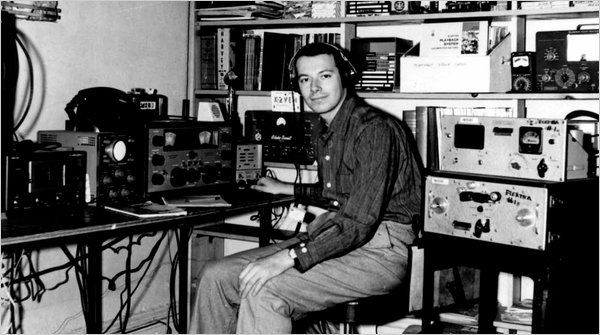
Jac in younger days.

Follow the Music

Stefano Santucci, a childhood conker buddy and fellow vinyl collector, recommended that I read Follow the Music: The Life and High Times of Electra Records In The Great Years of American Pop Culture by Jac Holzman and Gavan Daws.

He said that it was “…the cat’s pajamas. Highly recommend how this guy Jac Holzman discovered and produced some of the most amazing bands and songwriters, but also found their proper producer and engineers to get their best stuff out…not only the proper sound, but also   elected the album art and logos.”

Among Boomers, a common complaint regarding today’s recordings is the size of liner notes while holding a CD or, worse, no liner notes with a download.

Album covers we could read, but today’s font sizes (did anyone even know what the word “font” meant in the 60s?) (if one actually purchases a “hard” copy of a recording and not simply downloads it) are lilliputian.

Electra Records Jac Holzman

Elektra Records Jac Holzman

Jac Holzman

When I did read those covers, I always saw the name Jac Holzman on the back of my Elektra Records and gradually realized that Elektra Records was a company that could be depended upon to produce great music.

Holzman founded Elektra Records on October 10 1950 out of his St John’s College (Maryland) dorm room. (Sounds like Crawdaddy! founder Paul Williams, eh?)

Holzman had $300 bar mitzvah money, but needed $300 more.College friend and Navy vet Paul Rickholt put in his veterans bonus. To make the Elektra logo, Holzman turned two Ms on their side for the Es and used a K instead of a C. Voila.
Elektra Records Jac Holzman

Holzman was before Sam Phillips’s Memphis Studio.

Before Elvis.

Before Rocket 88. 

Before the Beatles were teenagers.

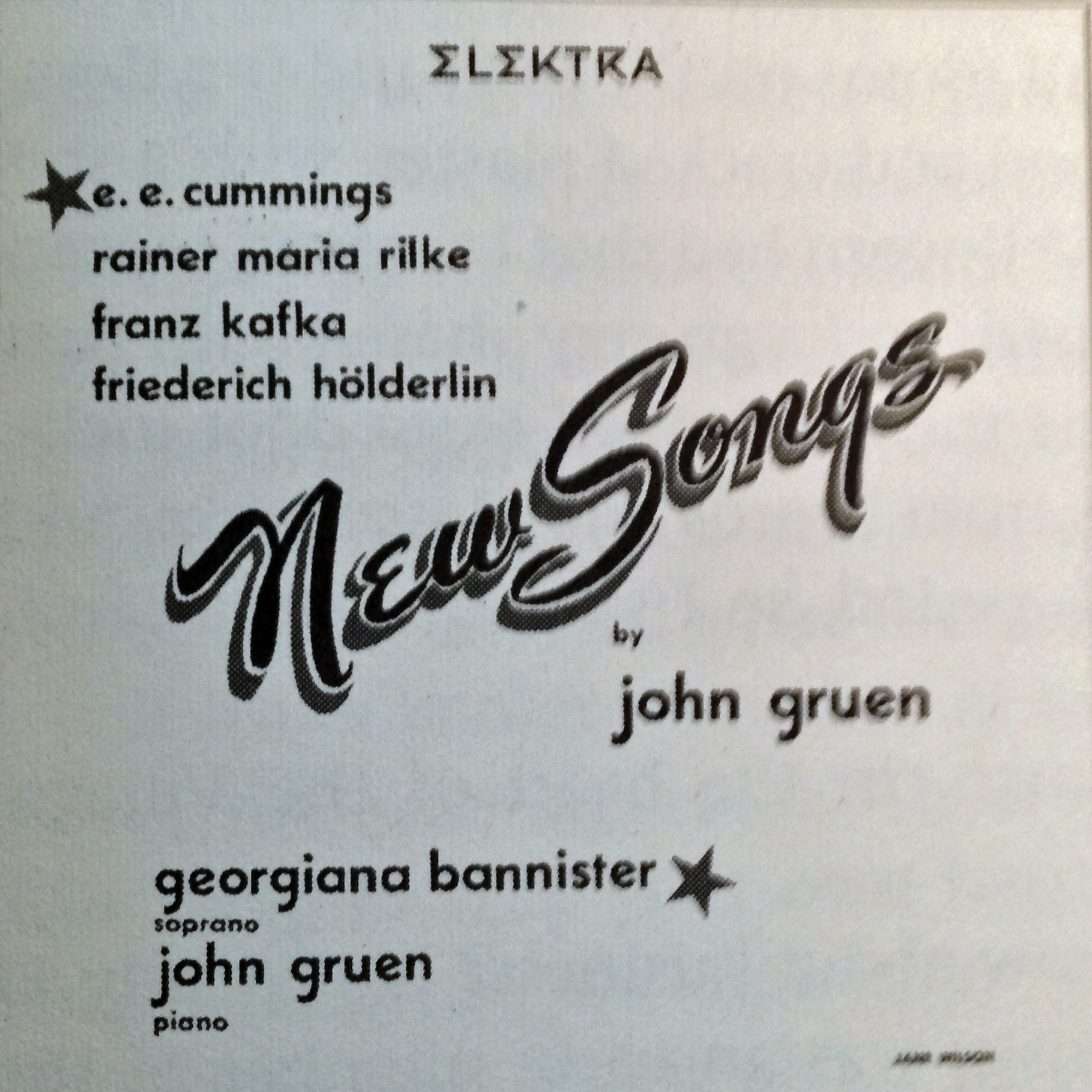
Elektra’s first album was an album of German art poems set to music by John Gruen and sung by Georgiana Bannister. Holzman left St John’s College and stepped into Greenwich Village’s nascent folk scene. He recorded Josh White (folk blues), Jean Ritchie (Appalachian folk) and Theodore Bikel (Israeli folk).

He recorded Judy Collins and Tom Paxton.

Record companies need income and Jac Holzman was creative. He could support the fledgling folk artist because he also released a series of albums aimed at branches of the military and various other groups’ interests and hobbies.

Elektra Records Jac Holzman

Sound effects

According to the Rock and Roll Hall of Fame site: Another of Holzman’s inspirations was a series of sound effects records. The first volume was released in 1960. Numbering 13 in total, they sold well and were extremely popular with the movie industry and radio programmers. Never had such a gallery of sounds and noises, including a definitive car crash, been so painstakingly recorded. Moreover, they were highly profitable because there were no performers’ royalties involved.

Another way he subsidized his Elektra label was by creating Nonesuch records in 1963. He made classical music available by licensing titles from overseas labels and marketing the records at a lower price than American labels selling the same titles.

As the music of the 60’s evolved, so did Elektra. Acoustic folk continued to be part of the label, but electricity too.

Elektra Records Jac Holzman

The Incredible String Band. David Ackles,  Carly Simon. Harry Chapin. Bread. Paul Butterfield Blues Band. Love. The Doors. Clear Light. The MC5. The Stooges. Queen.

Elektra Records Jac Holzman

Rock and Roll Hall of Fame

John Densmore spoke at Jac Holzman’s March 14, 2011 Rock and Roll Hall of Fame induction. Densmore said, “Without Jac Holzman, Jim Morrison’s lyrics would not be on the tip of the world’s tongue.”
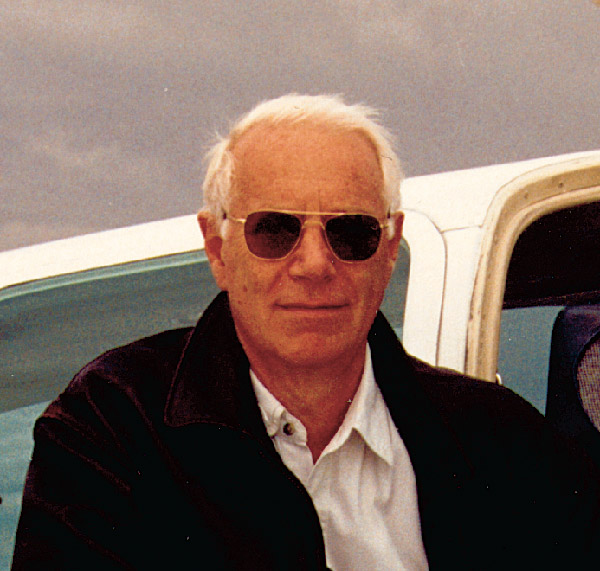
Music continues to benefit from Holzman. Nowadays he is now Senior Technology Adviser to Warner Music Group as “a wide-ranging technology ‘scout’, exploring new digital developments and identifying possible partners.”

2025’s 75th Anniversary

Music Collection published the following on June 18, 2025:

As part of Elektra Records’ 75th Anniversary celebration, Rhino Entertainment has just released an extensive collection of iconic Elektra titles on vinyl. The series encompasses acclaimed albums issued from the ’60s through the ’90s that underline the label’s era-defining, genre-defiant catalog. Titles from the collection were issued each Friday in July, featuring groundbreaking, timeless works. They will be available at participating brick-and-mortar stores across the country. 

References: Rock and roll Hall of Fame bio >>> R & R H o F Derek Sivers site >>> Sivers
Elektra Records Jac Holzman


November 13 Music et al

November 13 Music et al

Get That Communist, Joe

In 1954: the Kavaliers sang “Get That Communist, Joe” in which they poked fun at McCarthy’s passion to find Communists everywhere. (see Jan 8)

Joe, come here a minute

I get a red hot tip for you, Joe

See that guy with the red suspenders

Driving that car with the bright red fenders

I know he’s one of those heavy spenders

Get that Communist Joe

He’s fillin’ my gal with propaganda

And I’m scared she will meander

Don’t want to take a chance that he’ll land her

Get that Communist Joe

He’s a most revolting character

And the fellas hate him so

But with the girls this character

Is a Comrade Romeo

Since my love he’s sabotaging

And the law he has been dodging

Give him what he deserves, jailhouse lodging

Get that Communist Joe (Get that Shmo, Joe)

November 13 Music et al

What’s Happening! The Beatles in the U.S.A

November 13 Music et al

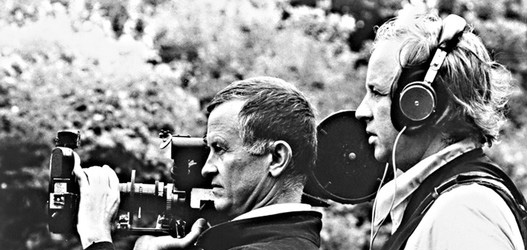
November 13, 1964: CBS TV shows a 50-minute documentary, “What’s Happening! The Beatles in the U.S.A.,” filmed by Albert Maysles, covering the Beatles U.S. tour and other activities that year.

Rolling Stone ranks the movie the 10th best rock documentary: Two years after the landmark Lonely Boy brought cinema vérité techniques backstage, the Maysles Brothers hitched a ride with the Fab Four on their first trans-Atlantic trip. Although Richard Lester would (lightly) fictionalize similar scenarios in A Hard Day’s Night, no camera before or since ever got so close to capturing John, Paul, George and Ringo in anything like their natural state; you can almost see the walls coming up as they realize how unavoidably public their lives are about to become. The DVD version, retitled The First U.S. Visit, swaps out scenes highlighting the drudgery of promo-tour obligations in favor of the band’s Ed Sullivan Showperformances — a fair trade, but it’s worth seeking out the original, which still screens in theaters occasionally.(see Nov 23).

November 13 Music et al

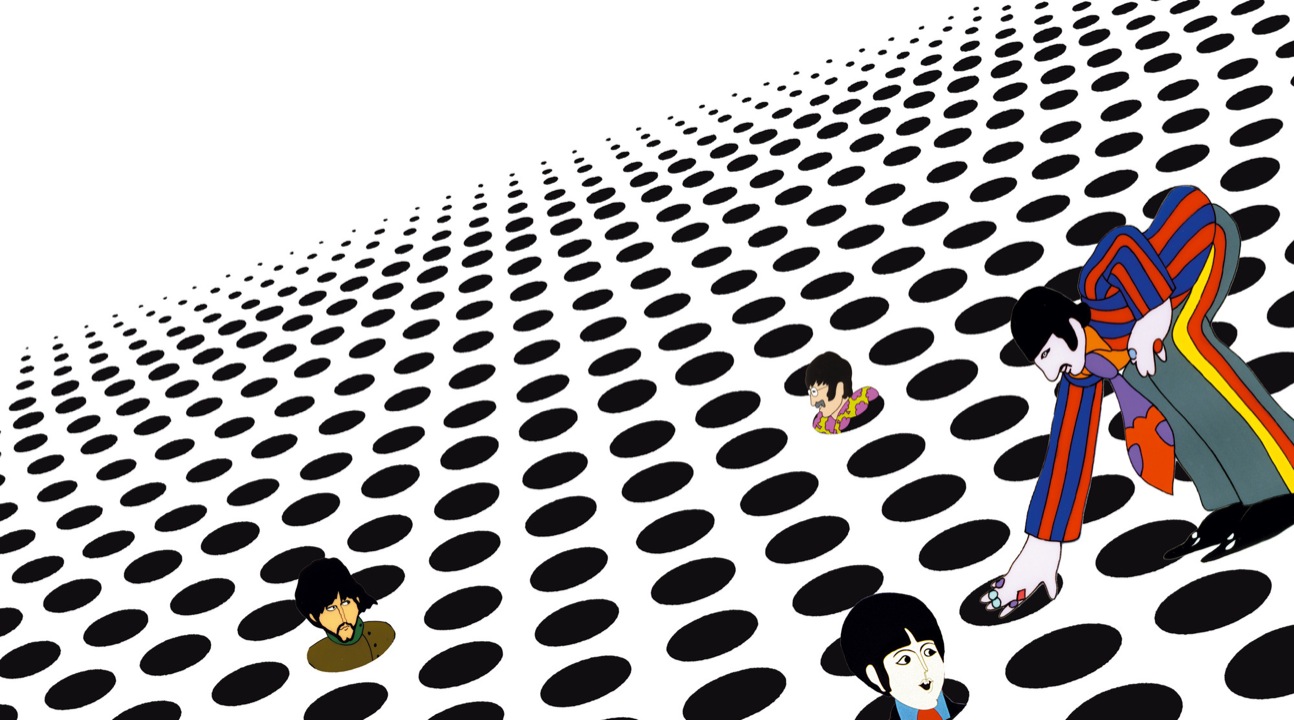
The Beatles in Yellow Submarine

and, oh yea,

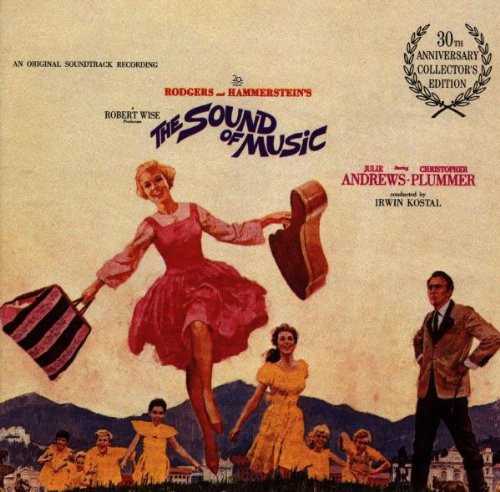
The Sound of Music

November 13 #Musicetal
album cover for The Sound of Music
November 13 Music et al

Yellow Submarine

November 13 #Musicetal

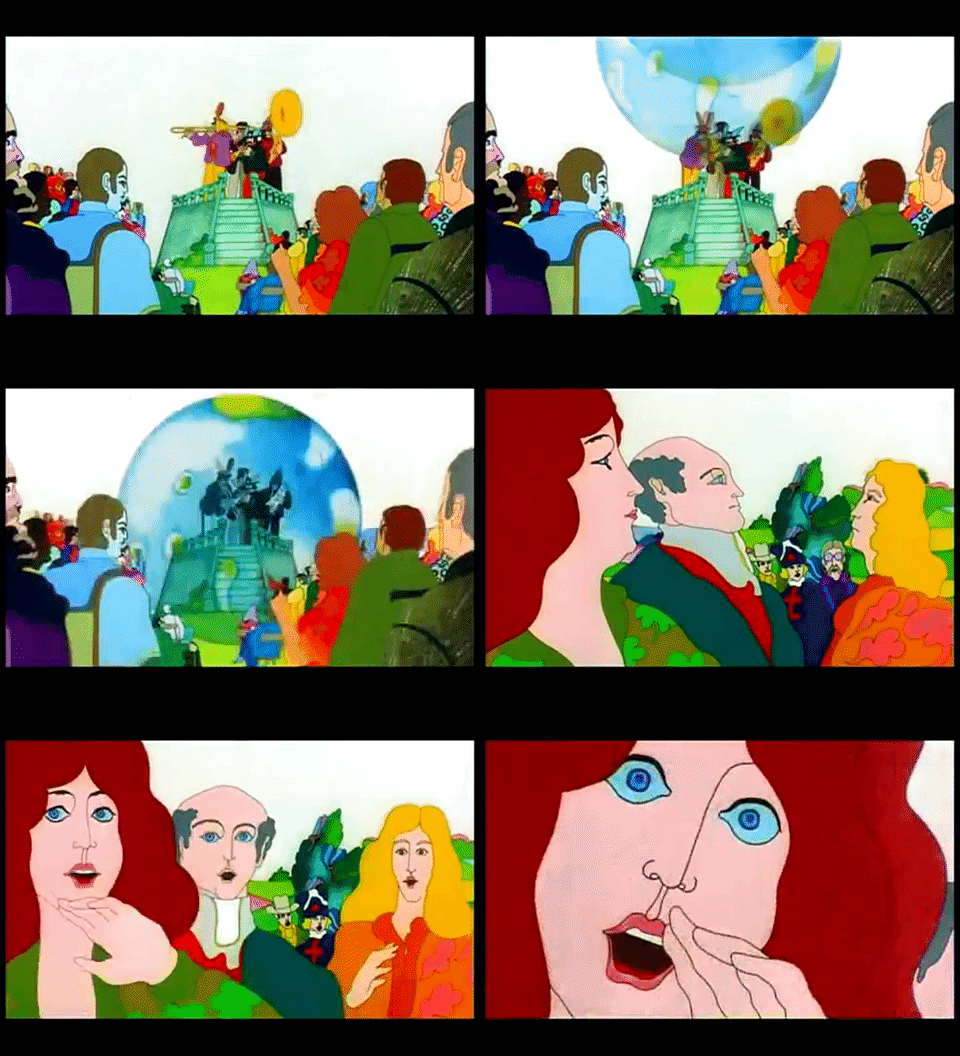
November 13, 1968, the US release of Yellow Submarine movie. The review of the Beatles “Yellow Submarine” began, “YELLOW SUBMARINE,” which opened yesterday, at the Forum and Tower East, is the Beatles’ first feature length cartoon, designed, for the most part beautifully, by Heinz Edelmann, in styles ranging through Steinberg, Arshile Gorky, Bob Godfrey (of the short film “The Do It Yourself Cartoon Kit”), the Sgt. Pepper album cover, and — mainly, really — the spirit and conventions of the Sunday comic strip.” (NYT review of Yellow Submarine) (see Nov 21)

November 13 Music et al

Sound of Music

November 13 –26, 1965, the Sound of Music soundtrack was the Billboard #1 album. This is how my brothers and sisters used to say goodnight, too.

November 13 Music et al
Dylan in the movies

November 13, 1972: always interested in movie making, filming began in Durango, NM for the Sam Peckinpah move, Pat Garrett & Billy the Kid. Peckinpah hired Dylan to create the music and play a small part in the film.

The whole experience was not a pleasant one as Peckinpah’s substance issues and resulting directing style made life difficult for all involved. (see February 1973)

November 13 Music et al